How to register a new vehicle in Punjab (Form F)
Every Punjab vehicle record begins with a registration, and the quality of that first entry decides how smooth the life of the vehicle will be: the fields entered at this stage are the same fields that buyers and traffic police will check for decades. This guide explains how a new vehicle is registered in Punjab, where the Form F application fits, which documents the Motor Registration Authority requires, and how the smart card and lifetime token tax complete the process. It pairs with MTMIS Punjab: the complete guide to online vehicle verification, which explains the record that registration creates.
Table of contents
- Who registers the vehicle, and where
- Documents required for registration
- The registration process, step by step
- The smart card and the e-registration card
- Token tax at registration
- Fees: what can be stated honestly
- Frequently asked questions
Who registers the vehicle, and where
Registration is done by the Motor Registration Authority (MRA) of the district, and the vehicle takes the number series of that district. Dealers begin the case at the point of sale through the Dealer Vehicle Registration System, preparing the application from the sale documents and submitting it into the same MTMIS record. Imported vehicles and cases the dealer system does not cover are filed directly at the MRA.
The district matters. A vehicle is registered where the process is filed, and later file-level work, from a duplicate card to a record correction, returns to the authority of registration. Owners who buy through a dealer in another district should confirm the district at purchase, because that choice follows the vehicle permanently.
Documents required for registration
The standard file for a locally manufactured new vehicle is built on the following documents. Confirm the live list on the official portal before filing, because requirements are set by notification and change over time.
- Form F, the prescribed application form for registration of a motor vehicle, completed and signed by the owner.
- The CNIC of the owner, matching the name in which the vehicle is to be registered.
- The original sales invoice issued by the dealer or manufacturer.
- The sales certificate of the vehicle issued by the manufacturer or its authorised dealer.
- For an imported vehicle, the customs documents, including the Goods Declaration, in place of the local sale papers.
- Where a bank or leasing company finances the vehicle, the hire purchase or lease documents, so that the lien is entered on the record from the start.
Names deserve special care at this stage. The owner name entered at registration is the name every later verification will display, and a spelling that differs from the CNIC creates friction at every transfer that follows.
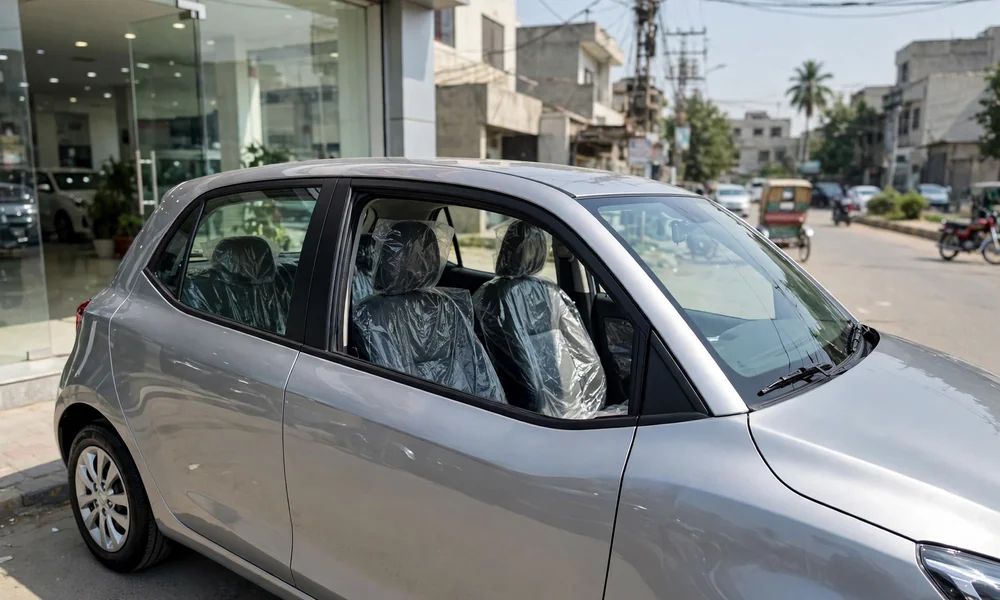
The registration process, step by step
- Prepare the file. Assemble Form F, the CNIC copy, the sales invoice and the sales certificate, or the customs papers for an imported vehicle.
- Submit the application at the MRA of the district, in person or through the dealer channel, and have the vehicle available where the authority requires presentation or inspection.
- Pay the assessed amount. The authority calculates the charges, and a challan is issued for payment through the banking channels.
- Receive the registration number. On acceptance, the vehicle is allotted its registration number in the district series, and the record is created in MTMIS with the owner, vehicle and payment details entered from the file.
- Collect the number plates issued for the allotted number and fit them to the vehicle.
- Receive the smart card by post after central printing, and download the free e-registration card for immediate use, as the next section explains.
The record created here is the one a future buyer will open from the verification portal, which is why accuracy at filing matters more than speed.
The smart card and the e-registration card
Registration no longer produces the old paper registration book as its main document. The owner receives a chip-based smart card, printed centrally and delivered by post, carrying the registration and owner details in printed and electronic form. Delivery timelines vary with printing and postal load, so the tracking service on the portal is the reliable guide to where a specific card stands.
While the physical card travels, the free e-registration card can be downloaded and used as proof of registration. Never pay a third party for this download; the department provides it at no charge. The card system, its security features, tracking and what to do if a card is lost are covered in the guide to the vehicle registration smart card in Punjab.
Token tax at registration
Registration also sets the token tax position of the vehicle. Under the current structure, cars up to 1000cc pay a one-time lifetime token tax at registration and owe no annual token afterwards, and motorcycles likewise pay their lifetime token at this stage. Larger cars enter the annual cycle, paying year by year through ePay Punjab. The amounts are calculated by the authority from the current schedule and appear in the registration challan, and how to check token tax online in Punjab explains how the position reads afterwards in the public record.
Fees: what can be stated honestly
Registration charges combine several heads: the registration fee itself, the number plate and smart card charges, and the token tax position described above. The total varies with the vehicle, principally its type and engine capacity, and the schedules are revised with the provincial budget. Guide websites publish totals that disagree with each other, which is why this guide prints no single figure as settled fact. The assessed challan, calculated from the live schedule for your vehicle, is the authoritative amount, shown before payment.
Frequently asked questions
What is Form F in Punjab vehicle registration?
Form F is the prescribed application form on which the registration of a motor vehicle is requested from the Motor Registration Authority. Dealers prepare the same application through the Dealer Vehicle Registration System in most new vehicle sales.
How long does new vehicle registration take in Punjab?
The application and number allotment are counter-stage work once the file is complete, while the physical smart card follows later by post. Card timelines vary with printing and postal load, so use the portal tracking service for a specific case. The downloadable e-registration card covers the gap and serves as proof of registration in the meantime.
Can a vehicle be registered in a district other than the residence of the owner?
Registration is filed with the MRA of a district, and the vehicle takes that district series. The choice is permanent for practical purposes, because later file work returns to the authority of registration. Confirm the district with the dealer before purchase if the point matters to you.
Is the lifetime token tax paid at registration for every vehicle?
No. Under the current structure the one-time lifetime token applies to cars up to 1000cc and to motorcycles, collected at registration. Larger cars pay token tax annually through ePay Punjab.
What documents does an imported vehicle need for registration in Punjab?
An imported vehicle is registered on its customs documents, including the Goods Declaration, together with Form F and the CNIC of the owner, rather than on a local sales invoice and sales certificate. Confirm the complete live document list on the official portal before filing, as requirements change by notification.