Motorcycle verification on MTMIS Punjab
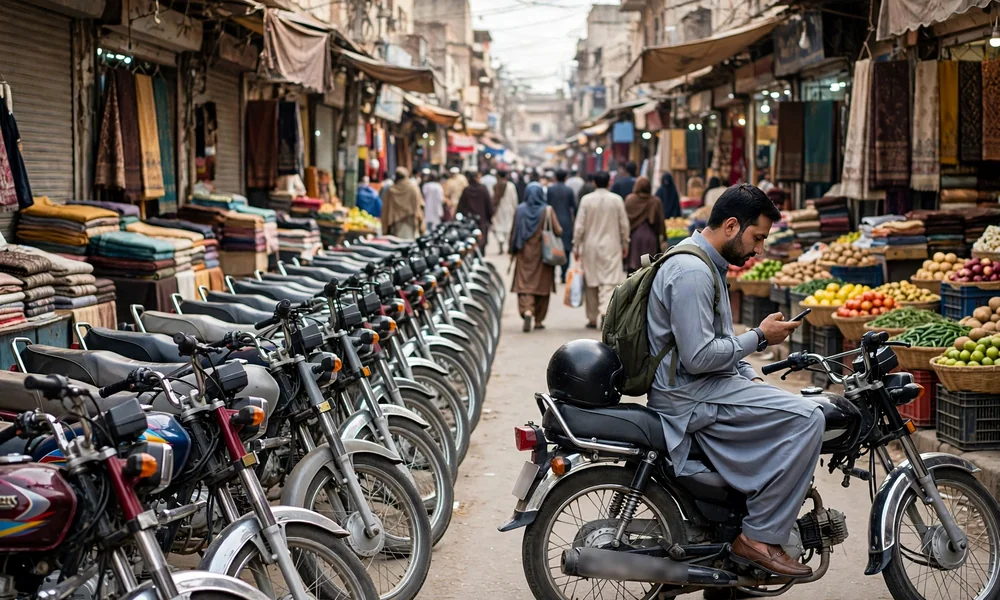
Motorcycles are the largest vehicle class on Punjab roads and the fastest-moving part of the used market, where a bike can be viewed, tested and sold within an hour. That speed is exactly why motorcycle verification matters: the record check is the only pause in the deal, and it is the pause that exposes a stolen bike, a tampered frame or a seller who does not own what he is selling. This guide covers verification as it applies to bikes, the differences from a car check that actually matter, and a full used-motorcycle buying checklist. The wider system is set out in MTMIS Punjab: the complete guide to online vehicle verification.
Table of contents
- Bikes sit in the same database
- How to verify a motorcycle online and by SMS
- The two numbers that matter on a bike
- Used-motorcycle buying checklist
- Token tax and the motorcycle record
- Frequently asked questions
Bikes sit in the same database
There is no separate motorcycle portal and no separate motorcycle database. A bike registered with any Motor Registration Authority in Punjab stands in the same MTMIS record as a car, is verified through the same form at mtmis.excise.punjab.gov.pk, and answers on the same SMS service.
The one structural difference in the motorcycle record is financial rather than technical. Motorcycles pay a one-time lifetime token tax at registration, so a correctly recorded bike shows no annual token arrears, ever.
How to verify a motorcycle online and by SMS
The online check follows the standard form. Open the verification option on the portal, enter the registration number, enter the registration date printed on the smart card or registration book, complete the security code and submit. The result shows the owner details, the make, model and year, the engine number and the payment position, exactly as how to verify a vehicle online on MTMIS Punjab, step by step sets out for every vehicle class. Note that the online result shows the engine number but not the chassis number; on a motorcycle, the chassis number is the frame number, and the comparison method in the next section covers it.
In the field, most bike checks run by SMS because deals happen in bazaars and workshops rather than at desks. Send the registration number to 8785 and read the reply, which carries the owner name, the make and model, the engine and chassis numbers and the token tax status. Vehicle verification by SMS is the complete guide to that method. Run the full web check as well before paying for any bike of significant value.
The two numbers that matter on a bike
A motorcycle has two stamped identifiers, and both must be physically read, not merely read off the papers.
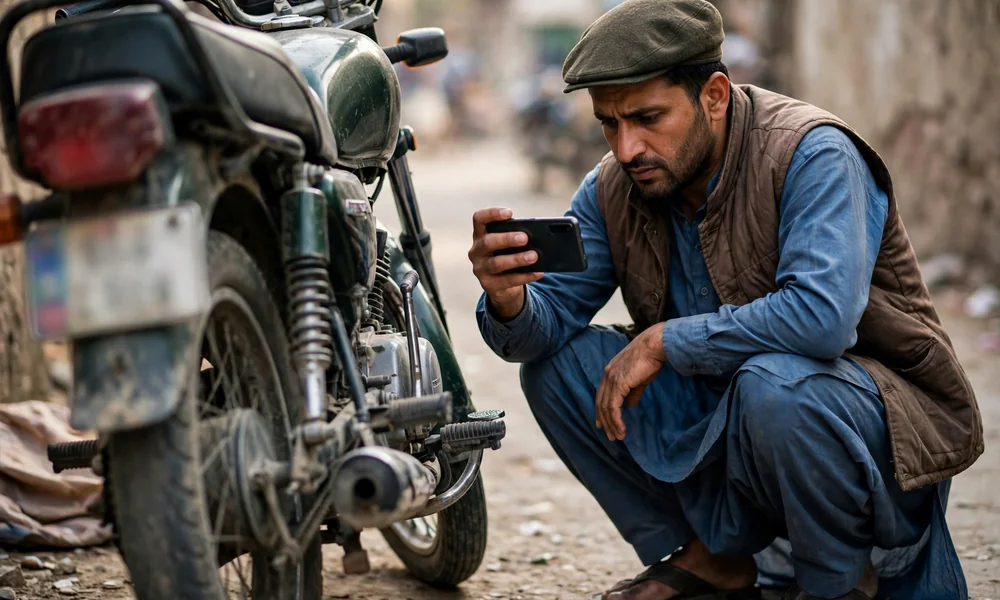
The engine number is stamped on the engine casing, and it is the number the online result displays. Compare it digit by digit. Engines on working bikes are swapped in ordinary mechanical life more often than car engines are, and a legitimate swap is recorded by the department; an unrecorded difference between the stamping and the record is the classic signature of a bike assembled from parts of several machines.
The frame number, the chassis number, is stamped on the steering head or frame of the bike. The online result does not display it, so compare the stamping against the smart card or registration book directly. Look at the stamping itself, not only at the digits: disturbed paint, fresh grinding marks or uneven characters around the number are evidence of tampering that no document can cure.
Used-motorcycle buying checklist
Work through this list at the bike, in order. Stop the deal at the first item that fails and cannot be explained with documents.
- Run the record check by SMS or online before discussing price, and save the result.
- Match the owner name in the record to the CNIC of the seller. A different name means the seller cannot transfer the bike.
- Match the make, model and year in the record to the bike in front of you.
- Read the engine stamping and compare it with the record, digit by digit.
- Read the frame stamping and compare it with the smart card or book, and inspect the metal around the stamping for grinding or repainting.
- Confirm the token position. A bike should stand clear under the lifetime token; investigate any dues story before proceeding.
- Inspect the documents. Original smart card or book, CNIC copy of the owner, and a sale receipt or agreement in writing.
- Check the mechanical basics on a test ride: engine noise, smoke, gears, brakes, lights, chain and sprockets.
- Agree the transfer before payment. Both parties complete the biometric transfer promptly; an open letter leaves the record with the seller.
- Price the whole deal. Any clearance cost, however small, belongs in the negotiation, not in a surprise after payment.
Token tax and the motorcycle record
Because the lifetime token is collected at registration, the motorcycle record should never accumulate the year-by-year arrears that complicate car purchases, and how to check token tax online in Punjab explains the structure for every class. The practical consequence for buyers is simple: the money side of a used bike deal is normally just the transfer, and any additional tax demand attached to a bike should be verified on the portal before it is paid to anyone.
Frequently asked questions
Can a motorcycle be verified on MTMIS Punjab in the same way as a car?
Yes. Motorcycles stand in the same provincial database and are checked through the same portal form and the same SMS service on 8785. The form asks for the registration number, the registration date from the card or book, and the security code.
Where is the frame number on a motorcycle?
The frame number, which is the chassis number of the bike, is stamped on the steering head or the frame, and it is also printed on the smart card or registration book. The online result does not display the chassis number, so this comparison is made between the stamping and the document. Inspect the metal around the stamping for grinding or repainting, which indicates tampering.
Does a used motorcycle carry token tax dues?
A correctly recorded motorcycle should not, because motorcycles pay a one-time lifetime token tax at registration rather than an annual amount. Any claim that a bike carries years of token arrears should be checked on the portal before money moves. Such a claim is sometimes used to move the price or to invent a clearance fee.
What if the engine number on the bike differs from the record?
Treat the deal as stopped until documents explain it. Engine swaps happen in the working life of a bike, but a legitimate change is recorded by the department, and the seller should hold that proof. An unrecorded mismatch is a standard sign of a machine assembled from parts, and it will obstruct every future transfer.
Is an SMS check enough before buying a motorcycle?
For a low-value bike it is a reasonable single screen, because the reply carries the owner, engine and chassis fields that expose most fraud. For any bike of significant value, add the full web check and the physical checklist in this guide. In every case, compare the stampings on the machine itself; no message or screenshot replaces that step.